

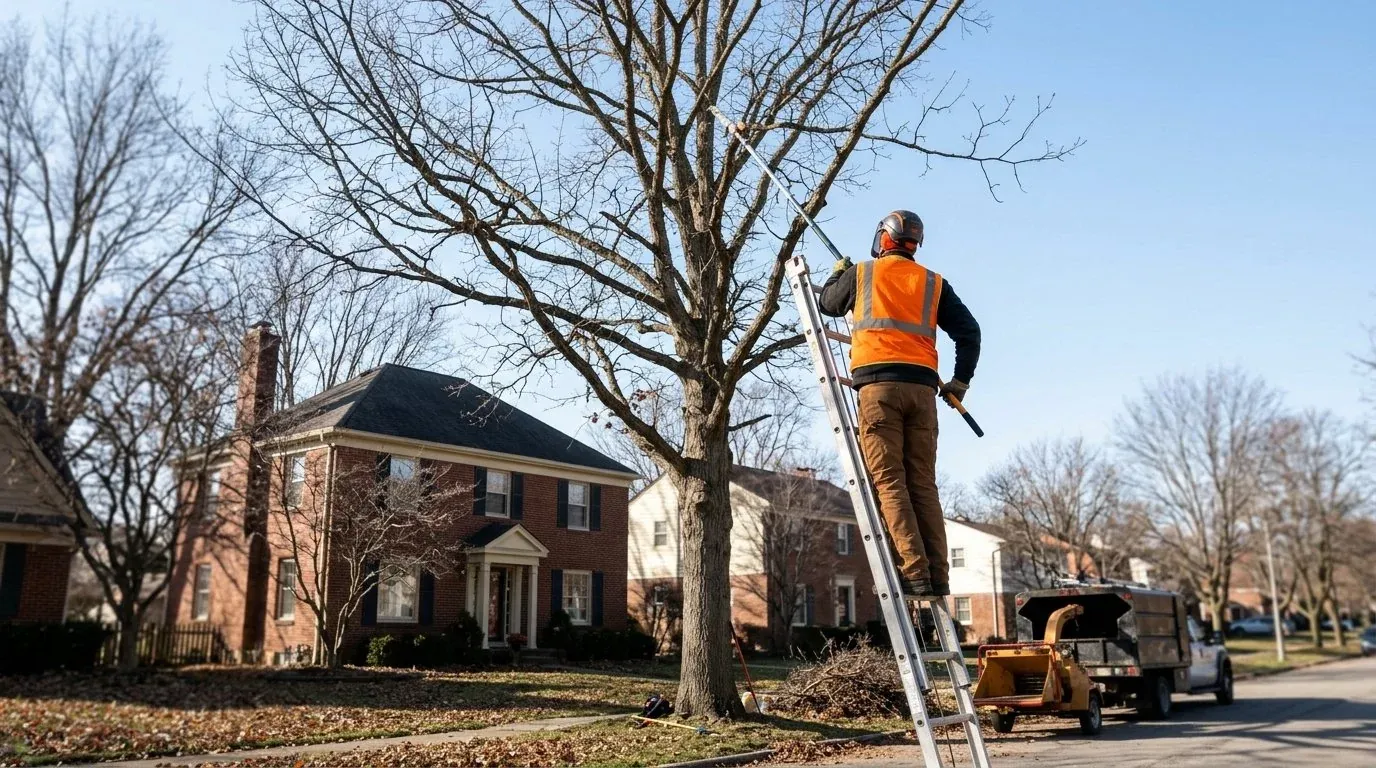
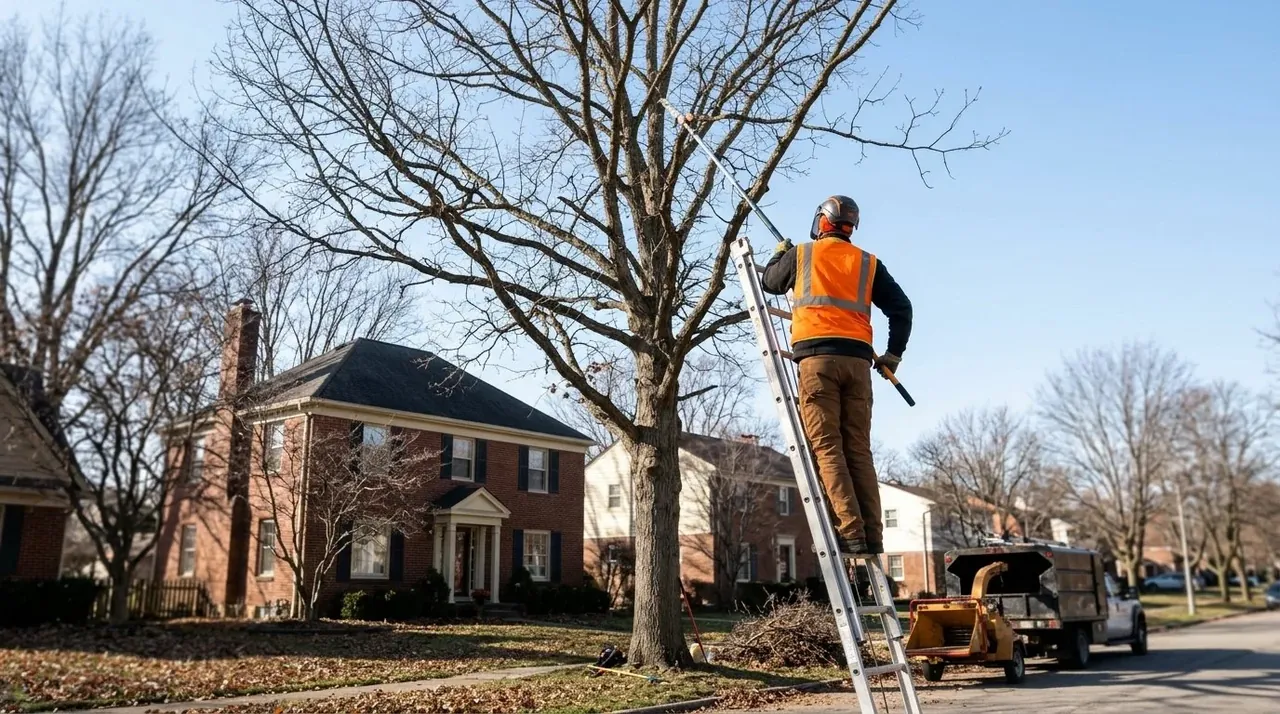
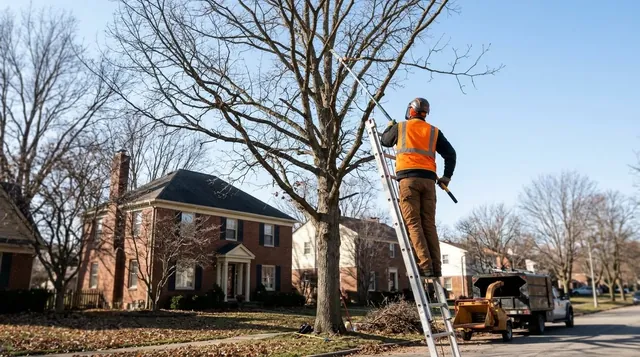


Dormant season tree pruning means cutting back branches after your trees drop their leaves and growth slows for winter. In Columbus, that window opens in November and stays open through the colder months. Once the canopy clears, you can finally see the shape of the tree and the problems hiding inside it.
Most homeowners wait until spring to think about their trees. By then, though, the best pruning window has already closed. Below, you will find out why winter timing works, what warning signs to look for on your own property, and what happens during a professional visit.
Why November Is the Right Time to Prune
November works because your trees are asleep, so cuts heal cleaner and stress stays low. When a tree is actively growing, fresh cuts can bleed sap, draw in insects, and open the door to fungal problems. Columbus summers bring the heat and humidity those problems love.
Once a tree goes dormant, its energy moves below ground and sap flow slows way down. As a result, cuts seal better, and pests have less reason to show up. You also get a clear view of the branch structure, which matters more than people expect. A bare tree shows you exactly where limbs cross, where bark has split, and where weight is piling up on one side. That visibility is why our tree trimming and pruning crew schedules so much structural work during these months.
Signs Your Trees Need Pruning Now
Walk your property after the leaves drop and look for weak, dead, or badly placed branches. These are the issues worth flagging before winter weather arrives:
- Branches that cross or rub against each other, which wears away the bark
- Dead or hanging limbs left over from summer storms
- Limbs growing into your roofline, power lines, or walkways
- Thick, crowded canopies that block light and airflow
- Cracks, hollow spots, or fungal growth on the trunk
Any one of these is worth a closer look. Left alone, they tend to get worse rather than better, especially once ice or heavy wind moves through. If you want a wider view of what Columbus yards are dealing with this year, our breakdown of tree care trends for 2026 covers bark scale, clay soil, and storm recovery in more detail.
What a Dormant Pruning Visit Includes
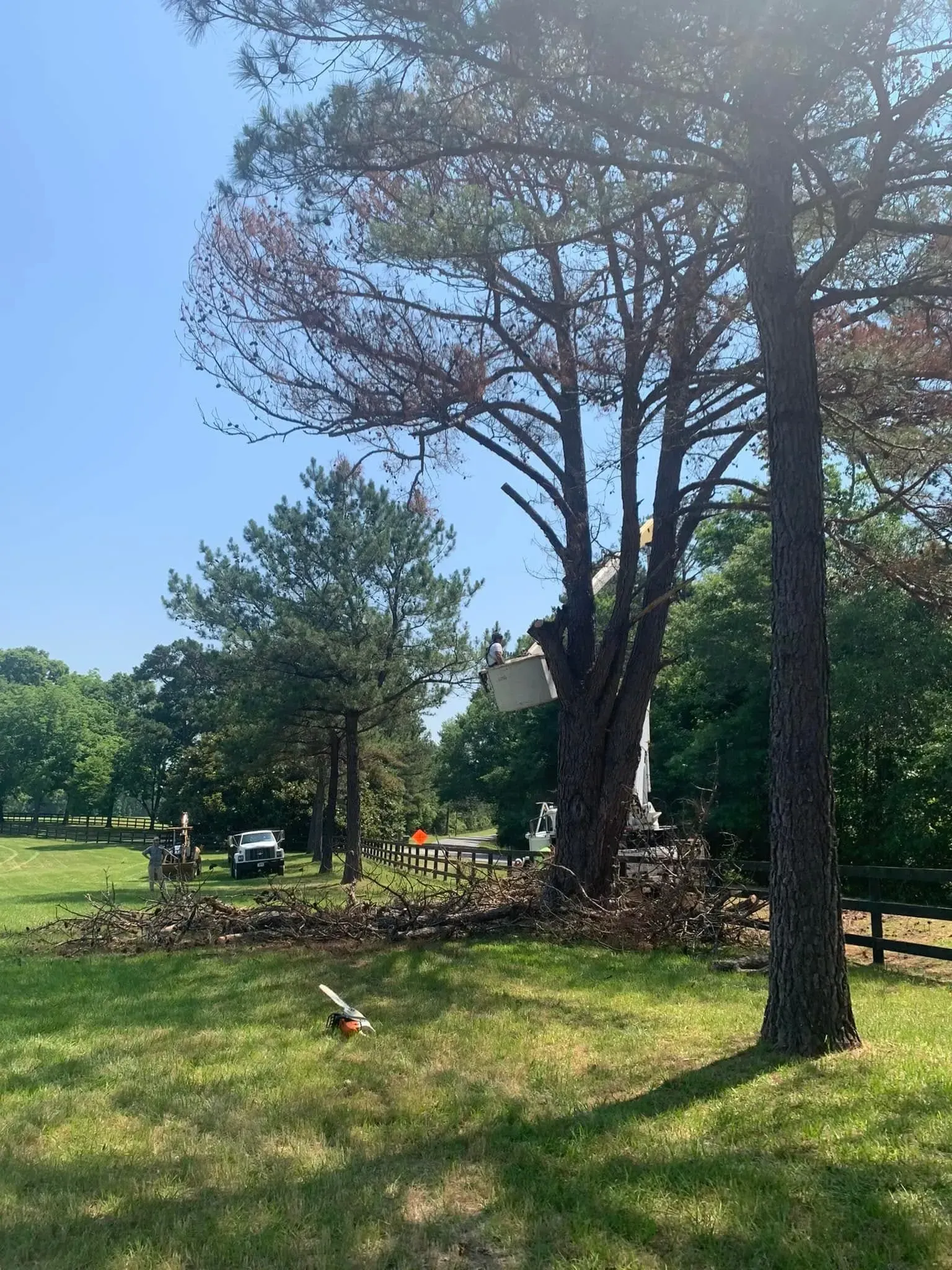
A dormant pruning visit is a targeted process, not a quick trim for looks. We evaluate the whole tree first, then make cuts based on how that species grows and where the weak points are.
Here is the typical order of work:
- Walk the property and assess each tree's health and structure
- Remove dead, damaged, or diseased limbs first
- Thin out crowded areas to let in light and air
- Correct weak branch unions before they split under storm load
- Shape younger trees so they grow with strong structure
- Clean up and haul off all debris
You will notice the difference in the cuts themselves. Clean, deliberate cuts at the right spot on the branch heal over properly. Rough or badly placed cuts leave wounds that never close. This same approach carries into all of our residential tree care work, whether you have two trees or twenty.
How Pruning Protects Your Property in Winter
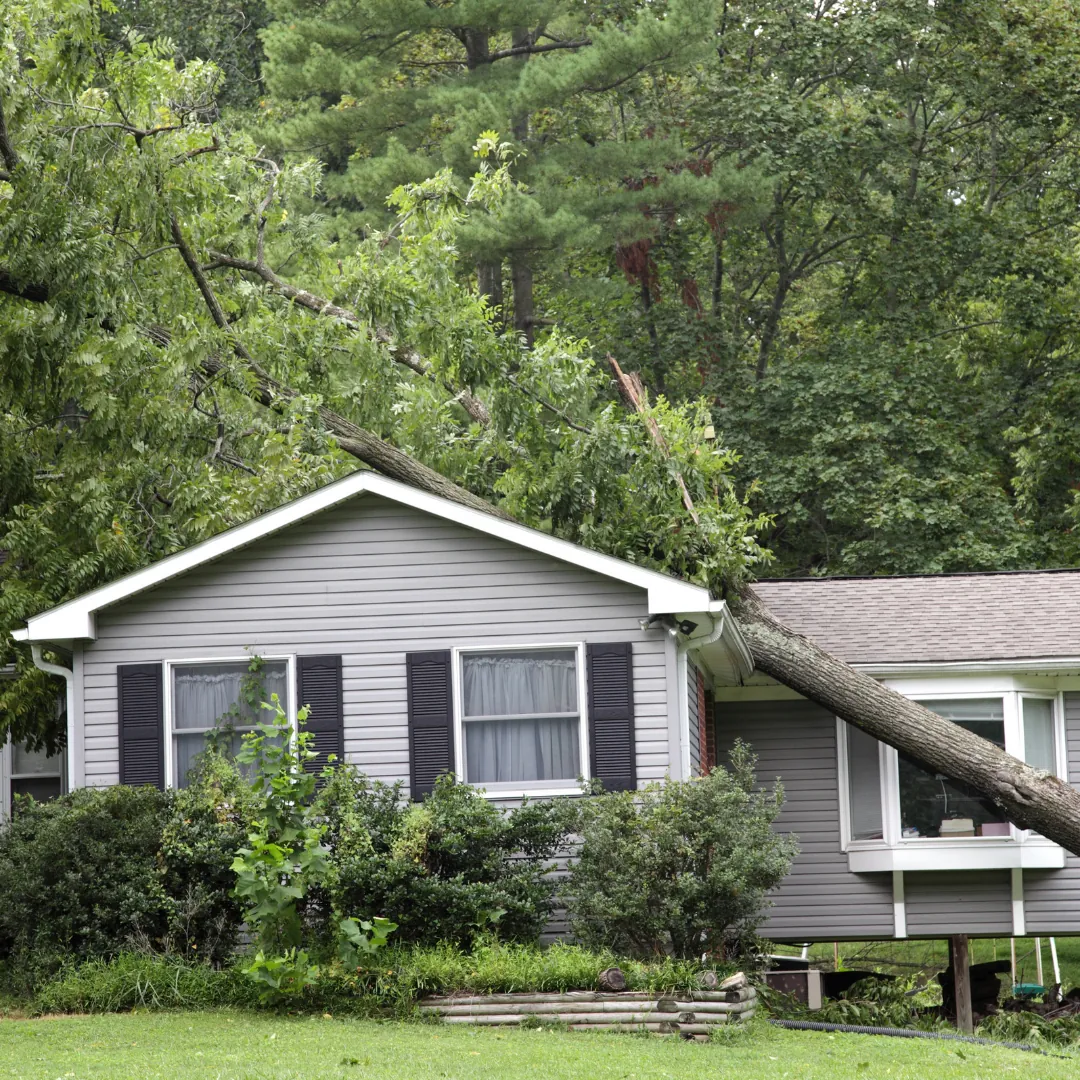
Pruning now lowers your risk of a branch coming down on your house, car, or fence later. Winter storms put real weight on limbs, and ice makes it worse. A tree with dead or overextended branches is far more likely to drop one when a front moves through.
That risk is not small. The Insurance Information Institute reported that severe storms caused more than $50 billion in insured U.S. losses in 2025, marking the third year in a row above that mark. Straight-line winds were a major driver.
Limbs hanging over your roof, driveway, or fence line create ongoing liability. Handling them while the tree is dormant costs far less than cleaning up after a failure. The same goes for the rest of your yard, since falling branches damage beds, fencing, and walkways that our landscaping team installed or maintains. If a storm does catch you off guard, we also run 24/7 emergency service.
Dormant Pruning Timeline for Columbus Trees
Use this schedule to plan when to call. Timing varies a little by species and weather, but this covers most yards in the area.
| Window | Best For | What to Expect |
|---|---|---|
| November to early December | Dead limb removal, hazard cleanup, structural assessment | Leaves are down and problem branches are easy to spot |
| December to January | Deep structural pruning on mature hardwoods | Trees are fully dormant, so stress is lowest |
| Late January to February | Shaping young trees, thinning crowded canopies | Cuts heal quickly once spring growth starts |
| Late February to March | Final touch-ups before bud break | Window closes as buds swell |
| April onward | Emergency and storm work only | Routine pruning waits until next dormancy |
Planning the Rest of Your Winter Yard Work
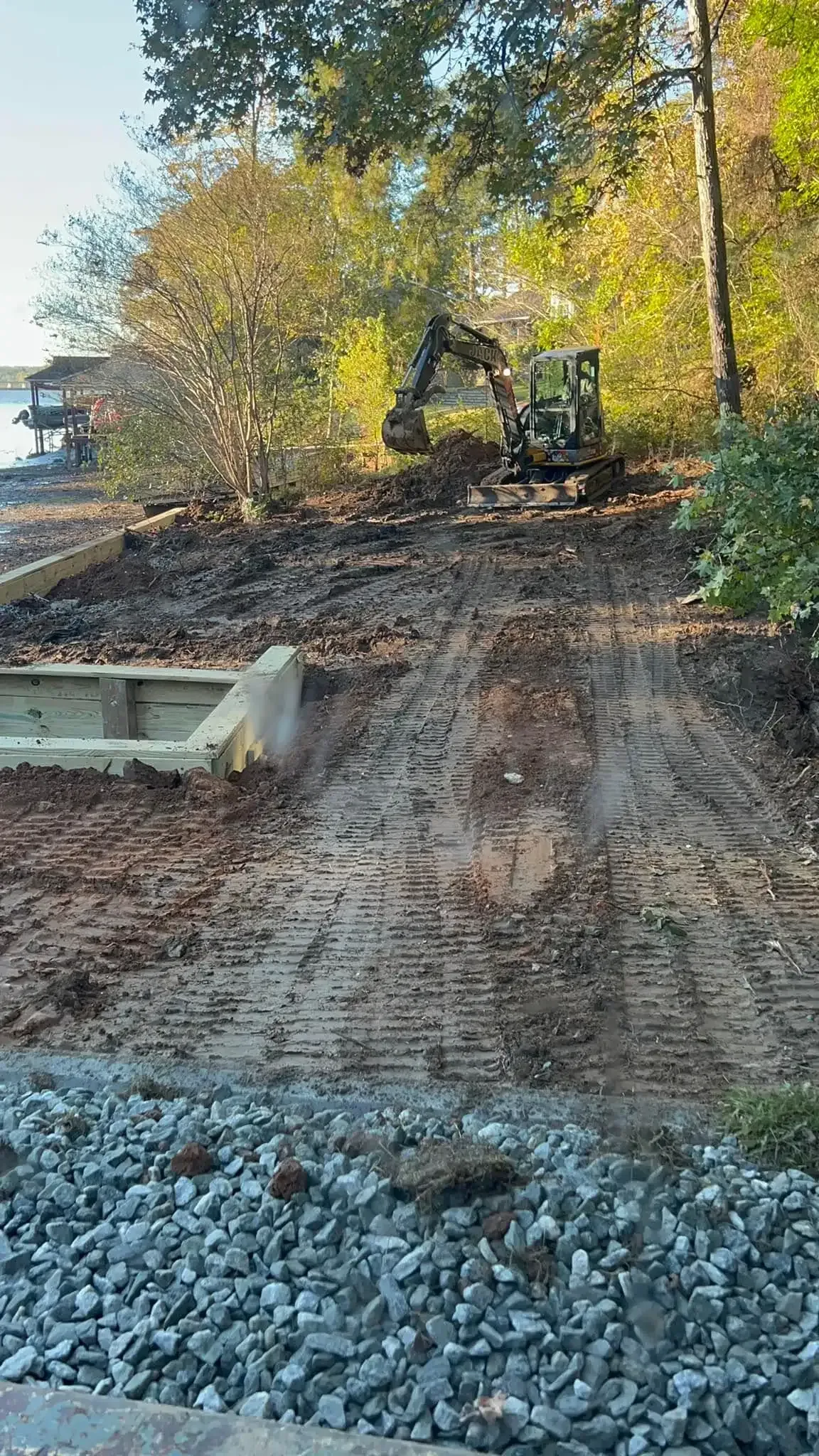
Dormant pruning pairs well with other cold weather projects, so it is a good anchor for your winter list. Since crews are already on site and the yard is bare, this is the easiest time of year to tackle bed reshaping, drainage fixes, or removals.
Healthy, well-shaped trees also support the broader value of your property, which we covered in our guide to how trees and landscaping affect property value. If you are mapping out bigger changes for spring, our walkthrough on planning a low-maintenance yard is a useful starting point.
FAQs About Tree Pruning
Do my trees need pruning every year?
Not every tree does. A yearly inspection helps, though, because it catches small problems early. Mature trees with dense canopies or known weak points often need more frequent attention than young, healthy ones.
Can I prune after new growth starts in spring?
You can, but you lose most of the benefit. Pruning after growth begins puts more stress on the tree and raises the chance of disease entering the fresh wounds during warm, humid weather.
How do I tell if a branch is dead or just dormant?
Dead branches have brittle bark, no visible buds, and often feel light or hollow compared to healthy limbs. Scratching the bark lightly also helps, since living wood shows green underneath. A trained crew can confirm it quickly on site.
Does pruning really prevent storm damage?
Yes. Removing weak, dead, or crossing limbs reduces how much a tree can shed under wind or ice load. It will not make a tree storm-proof, but it meaningfully lowers your risk.
Will pruning hurt next year's flowers or fruit?
Not when it is timed correctly. Proper dormant pruning actually supports better blooms and fruit, because the tree sends its energy to fewer, stronger branches once growth resumes.
Schedule Your Dormant Season Pruning in Columbus
The November window is open now, and it closes once buds start to swell in late winter. If you spotted any of the warning signs above on your property, this is the time to have someone take a look.
Call Residential Tree Service and Landscape at (706) 681-3582 or request a free estimate to get your trees evaluated before the next storm rolls through.